In the hour of adversity, be not without hope
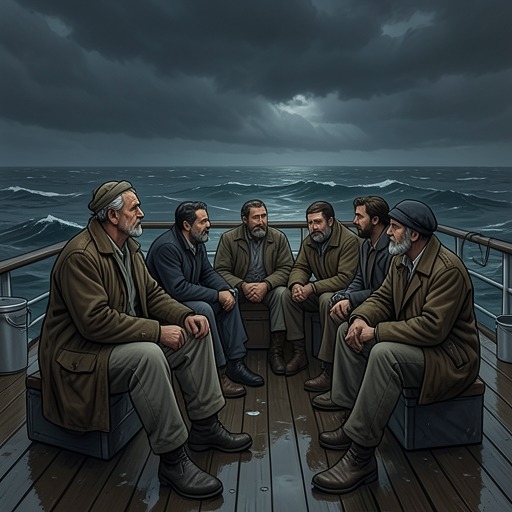
Not Without Hope“In the hour of adversity, be not without hope” is a Persian proverb that Nick Schuyler adopted as the governing expression of his survival narrative. He found it after the accident while looking through quotations in a book sent to him, and recognized in its concise command the principle that had carried the four men through the overturned boat, cold water, exhaustion, and fear: there had been no moment when they declared themselves finished.
Discovery and Meaning
Nick Schuyler encountered the proverb while still trying to understand the 43 hours he had spent in the water and the deaths of Marquis Cooper, Corey Smith, and Will Bleakley. He decided that its meaning required no further explanation: adversity demanded persistence, not surrender. The saying therefore works both as a personal conviction and as a retrospective interpretation of the group’s conduct, preserving the idea that cooperation continued even when the men’s physical condition was collapsing.
Its force is sharpened by the actual mechanics of the disaster. Marquis was unable to free the anchor despite maneuvering the boat and having Will and Corey pull from different directions. When the anchor line was tightened and the motor was throttled forward, the anchor dug in, the stern submerged, and the boat capsized before the men could make a Mayday call. Their later attempts to right the hull failed because the overturned center console acted as a resistant rudder and gave them no leverage. The proverb does not erase those errors; it names the determination that followed them.
Survival Under Physical Extremity
The expression is set against bodily processes that could easily be mistaken for a loss of will. Seawater ingestion could produce a dangerous sodium imbalance, draw water from the cells, and progress toward delirium, seizures, heart failure, and death from dehydration. Cold-water immersion threatened hypothermia, bringing clumsiness, shallow breathing, blue lips, confusion, slurred speech, and irrational behavior.
The men’s strength offered no simple protection. Evidence cited in the narrative indicates that younger, fitter bodies could lose heat more quickly because they carried less insulating fat, while greater muscle mass could reduce flotation and make prolonged treading water more demanding. An average twenty-five-year-old immersed in 65-degree water might remain functional for 9.9 hours and survive for 15 hours, whereas a fifty-year-old might remain functional for 11.6 hours and survive for 17.6 hours. The proverb’s hope thus exists within measurable physiological limits rather than outside them.
Marquis began slurring and rambling after taking in salt water and dry-heaving; his teeth chattered constantly. After twelve hours in the water, Corey developed desperate, aggressive energy and repeatedly tried to climb onto the hull, behavior that Nick recognized as no longer reflecting Corey’s ordinary character. When Nick was rescued, his temperature was 89.5 degrees, his lips were turning blue, his breathing was labored, and he appeared to be entering early shock. These details make hope a disciplined resistance to confusion and bodily failure, not a sentimental assurance of survival.
Inscription and Memorial Design
Nick immediately knew in the hospital that he would get a tattoo bearing the men’s names or initials. He understood that the four men had worked and trained together, and that their cooperation was part of the reason he remained alive. The proverb became the background text for a design made by an artist friend: a Celtic cross with the initials of Victor Marquis Cooper, William Ward Bleakley, and Corey Dominic Smith at its points.
The tattoo also contains a date, 3/1/2009, marking the day the three men died; a rope intertwined with the cross; and an anchor at the bottom. Its symbols bind the saying to the accident’s specific objects and decisions. The rope recalls the line that held the boat down, while the anchor recalls both the fishing trip and the chain of choices that caused the stern to submerge. Nick placed the tattoo on his right triceps, but had to wait three months for his atrophied arm to regain enough muscle.
The design accumulated private associations. The date’s number, 31, had been Nick’s high-school basketball number. The cross represented the will to survive, while the presence of Will Bleakley’s name made that symbol inseparable from Nick’s best friend. Paula Oliveira also honored Will with a small anchor tattoo on her ribs, creating a parallel memorial rather than leaving the proverb as Nick’s solitary possession.
Grief, Guilt, and Refusal to Give Up
The proverb became especially important because the deaths could be misread as evidence that Marquis, Corey, and Will had simply given up. Dr. Mark Rumbak rejected that interpretation. Hypothermia could cause delirium, lower potassium levels, and damage the heart’s cell membranes until the heart could no longer contract; the men were confused by the cold, not making a lucid decision to abandon life. If Nick had tied them to the boat, their hearts might have stopped before rescuers arrived.
Nick said that guilt was the one feeling he did not have because he knew he had done everything possible at the time. Yet survival did not make the aftermath easy. He repeatedly wondered why he was still alive and thought about the accident constantly. The proverb consequently carries a difficult double meaning: it rejects self-condemnation, but it does not remove grief, bewilderment, or the burden of continuing after others have died.
Later Significance
Nick used the proverb to frame survival as collective rather than individual. He emphasized that the four men worked together and never said they were done, even though the accident’s official causes were concrete and preventable: the anchor line was improperly tied to an eye bracket on the port side of the transom, the motor was throttled forward to pull the anchor free, and insufficient slack allowed the stern to submerge and the boat to capsize. The saying therefore does not turn the disaster into fate; it preserves the men’s effort after a sequence of human and environmental failures.
The phrase also became a durable answer to the question of what survival meant. Nick returned to training after the accident, using strenuous workouts to direct stress and anger, but he found that working with Marquis and Corey had possessed an intensity he could not reproduce. Six months after the accident, his mood began to brighten and his humor returned, yet the friends remained physically present through the tattoo and symbolically present through the proverb. “In the hour of adversity, be not without hope” thus serves as memorial, promise, and testimony: it records the men’s refusal to quit while acknowledging that hope can coexist with irreversible loss.